
In the competitive B2B landscape, a steady stream of qualified leads isn't a luxury; it's the lifeblood of your business. Generic tactics no longer deliver results. Decision-makers are more discerning, and your strategy must be sharper, more targeted, and more valuable than ever before. This guide moves beyond the basics to provide a comprehensive roundup of powerful lead generation strategies B2B leaders are using to not just find, but actively engage and convert their ideal customers.
We'll explore the specific, actionable steps behind each high-impact method, from leveraging intelligent automation in your email marketing to building unshakeable thought leadership through content. For those looking to build a robust foundation, it's worth exploring comprehensive expert strategies to fill your B2B pipeline that detail the core subject of this guide.
Whether you're a sales leader aiming to convert more demo requests or a marketing team focused on improving ROI, these proven strategies provide the framework you need to fill your sales pipeline and accelerate revenue. We will break down each approach into practical implementation details, real-world examples, and the key metrics you need to track for success. Let's dive into the tactics that will supercharge your growth.
1. Content Marketing & Thought Leadership
Content marketing is a strategic approach that involves creating and distributing valuable, relevant, and consistent content to attract and retain a clearly defined audience. This method positions your company as an industry expert, building trust and generating high-quality B2B leads by addressing your prospects' most pressing pain points long before they are ready to buy.
This inbound approach draws potential customers to you, rather than you pushing your message onto them. Companies like HubSpot exemplify this, using a comprehensive blog and free resources to generate millions of leads. Similarly, Salesforce's Trailhead platform educates a community of potential customers, building brand loyalty and a steady lead pipeline.
How to Implement This Strategy
To succeed with this strategy, focus on creating content that solves real problems for your target audience. For those looking to dive deeper into the nuances of content creation, consider the steps involved in developing a comprehensive B2B content marketing strategy.
- Create Topic Clusters: Build your content around core topics to establish authority and improve SEO performance.
- Leverage Original Research: Use data, surveys, and unique insights to create highly shareable, authoritative content that competitors cannot easily replicate.
- Include Clear CTAs: Every piece of content, from blog posts to whitepapers, should guide the reader toward a next step, such as downloading an ebook or requesting a demo. Learn more about effective inbound lead generation tactics.
2. LinkedIn Lead Generation & Social Selling
LinkedIn lead generation is a targeted B2B strategy that leverages the world's largest professional network to identify, connect with, and nurture potential customers. It combines organic relationship-building with advanced advertising capabilities to directly reach and engage key decision-makers, making it a powerful tool for modern B2B lead generation strategies.
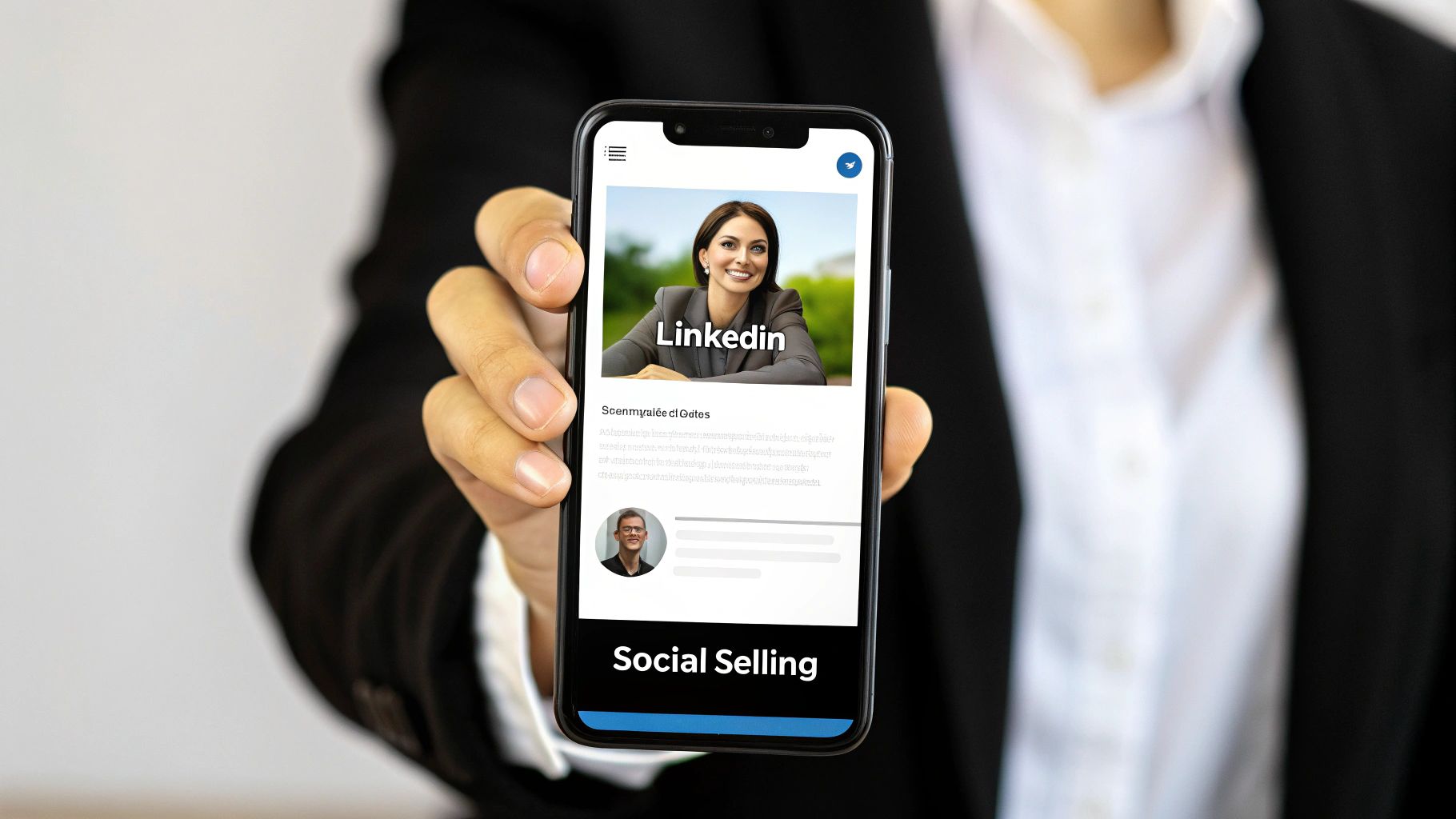
This approach focuses on building genuine connections and establishing credibility within your industry. For example, IBM's extensive employee advocacy program on LinkedIn has driven significant B2B engagement by empowering its team to share valuable insights. Similarly, identity management company Okta has achieved three times higher conversion rates by using highly targeted LinkedIn advertising campaigns to reach specific professional audiences.
How to Implement This Strategy
Success on LinkedIn hinges on building trust and providing value before making a sales pitch. This means shifting from a "hard sell" mindset to one focused on education and relationship building. To master this, you must consistently share relevant content and engage with your network authentically.
- Optimize Your Profiles: Ensure both your personal and company profiles are fully optimized with clear messaging, compelling visuals, and social proof to establish immediate credibility.
- Share Valuable Insights: Post content that addresses your audience's challenges and provides real-world solutions. Avoid overly promotional posts and focus on being a resource.
- Use Advanced Search: Leverage LinkedIn Sales Navigator or Boolean search operators to create highly specific prospect lists based on criteria like industry, job title, company size, and geography.
- Engage Before Connecting: Interact with a prospect's content by liking, commenting, and sharing their posts before sending a connection request. This personalized approach warms up the interaction.
3. Email Marketing & Marketing Automation
Email marketing is a powerful, direct communication channel, while marketing automation uses software to automate repetitive marketing tasks. Together, they form a sophisticated B2B lead generation strategy that nurtures prospects through the entire buying journey. This approach uses segmentation, personalization, and behavioral triggers to deliver relevant content at optimal times, effectively converting subscribers into sales-qualified leads.

This method allows for scalable, personalized communication that keeps your brand top-of-mind. Companies like Pardot (by Salesforce) use lead nurturing campaigns to boost sales productivity by over 30%, while Shopify's B2B email sequences consistently achieve open rates above 20%. These examples showcase how automated, targeted emails can drive engagement and guide prospects toward a purchase decision.
How to Implement This Strategy
To execute this strategy effectively, you must move beyond generic email blasts and focus on delivering personalized value at every stage. You can explore a deeper dive into these concepts and tools to enhance your approach to autopilot email marketing campaigns.
- Segment Your Audience: Group contacts based on behavior, demographics, industry, and engagement levels to send highly relevant messages.
- Implement Lead Scoring: Assign points to leads based on their actions (e.g., opening an email, visiting a pricing page) to identify and prioritize the most sales-ready prospects for your team.
- Use Progressive Profiling: Gradually collect more information from your leads over time using smart forms in your landing pages, which prevents overwhelming them with long forms initially.
- Set Up Re-engagement Campaigns: Create automated workflows to win back inactive subscribers, cleaning your list and maximizing the value of your existing audience.
4. Search Engine Optimization (SEO) & Organic Search
Search Engine Optimization (SEO) is a long-term lead generation strategy focused on improving organic search visibility to attract potential customers actively searching for solutions. This approach involves optimizing your website's content, technical elements, and authority signals to rank higher in search engine results for relevant business keywords, ensuring you are found at the exact moment of need.

This inbound method consistently drives high-intent traffic because it connects you with prospects who are already looking for what you offer. For instance, Ahrefs' renowned SEO blog attracts hundreds of thousands of monthly organic visitors, converting them into leads. Similarly, SEMrush generates over 60% of its leads from organic search, demonstrating the power of a well-executed SEO strategy for sustainable B2B growth.
How to Implement This Strategy
To effectively leverage SEO as one of your core lead generation strategies for B2B, you must align your content with user search intent and technical best practices. A good place to start is by learning the fundamentals of creating content that both users and search engines will love.
- Target Commercial Intent Keywords: Focus on long-tail keywords that signal a user is close to making a purchase decision, such as "best CRM software for small business" or "Salesforce integration services."
- Build Topic Clusters: Create comprehensive pillar pages for broad topics and support them with detailed cluster content to establish topical authority and improve rankings.
- Optimize for Rich Results: Implement schema markup to enhance your appearance in search results with features like FAQs and reviews, and optimize content to capture featured snippets.
- Acquire High-Quality Backlinks: Build your site’s authority through digital PR, guest blogging on reputable industry sites, and creating link-worthy original research.
5. Account-Based Marketing (ABM)
Account-Based Marketing (ABM) is a highly focused B2B strategy that inverts the traditional marketing funnel. Instead of casting a wide net, ABM concentrates marketing and sales resources on a predefined set of high-value target accounts, treating each one as its own market. This approach ensures maximum personalization and alignment between departments.
ABM is one of the most effective lead generation strategies b2b for companies with high-value, complex sales cycles. For instance, Snowflake famously targeted Fortune 500 companies with personalized video campaigns, and 6sense uses orchestrated ABM plays to achieve 3x higher win rates. This precision-driven method generates fewer, but significantly higher-quality, opportunities that are more likely to convert.
How to Implement This Strategy
A successful ABM program begins with tight sales and marketing alignment to identify and engage target accounts. To learn more about how this fits into a broader plan, explore these additional B2B lead generation strategies.
- Select Target Accounts: Start by building a small, focused list of 50-100 high-value accounts that match your ideal customer profile (ICP).
- Develop Deep Intelligence: Research each account to understand their specific challenges, key stakeholders, and business goals before launching campaigns.
- Create Bespoke Content: Craft account-specific content, such as personalized landing pages or industry-specific case studies, that speaks directly to their unique pain points.
- Leverage Intent Data: Use third-party intent data to time your outreach perfectly, engaging accounts the moment they show active buying signals for your solution.
6. Webinars & Virtual Events
Webinars and virtual events are an interactive B2B lead generation strategy that uses educational presentations, panel discussions, and virtual conferences to attract and engage potential customers. This approach combines thought leadership with direct audience interaction to build relationships and capture qualified leads in real-time, positioning your brand as an accessible authority in your field.
This highly engaging format allows for a two-way conversation that static content cannot offer. Companies like HubSpot leverage this effectively with weekly webinar programs that generate over 20,000 leads monthly. Similarly, Salesforce's Trailblazer Community Events use a virtual event model to drive enterprise lead generation and foster a powerful user community.
How to Implement This Strategy
Success with webinars hinges on delivering genuine value and fostering interaction. The goal is to educate and engage, not just to sell. Choose topics that solve a specific, urgent problem for your target audience, and you will attract high-intent prospects eager to learn from your expertise.
- Create a Series: Instead of one-off events, develop a webinar series around a core theme. This builds a loyal audience and creates a consistent pipeline of B2B leads.
- Boost Engagement: Incorporate interactive elements like live polls, Q&A sessions, and chat discussions to keep attendees actively involved and participating.
- Prompt Follow-up: Send a follow-up email within 24 hours containing the recording, relevant resources, and a clear next step. Use registration data to segment and personalize these communications for maximum impact.
7. Pay-Per-Click (PPC) Advertising & Paid Search
Pay-Per-Click (PPC) advertising is a targeted digital marketing model where advertisers pay a fee each time one of their ads is clicked. This strategy offers immediate visibility by placing promotional content directly in front of potential customers when they actively search for relevant keywords or browse related websites on platforms like Google Ads and LinkedIn.
Unlike organic methods, PPC delivers rapid results, making it an essential component of many lead generation strategies B2B. For instance, Unbounce credits paid search for driving over 40% of its qualified leads, while HubSpot has famously achieved a return of $6 for every $1 spent on its Google Ads campaigns. These examples highlight PPC’s power to generate high-intent leads quickly and efficiently.
How to Implement This Strategy
To maximize your return on ad spend, focus on precise targeting and continuous optimization. A well-structured campaign ensures your budget is spent on clicks most likely to convert into valuable business leads.
- Create Tightly Themed Ad Groups: Group keywords by specific themes to create highly relevant ad copy and landing pages, which improves your Quality Score and lowers costs.
- Use Negative Keywords: Actively build a list of negative keywords to exclude irrelevant search queries, preventing wasted ad spend on unqualified traffic.
- Implement Conversion Tracking: Set up robust conversion tracking to measure the true ROI of your campaigns, allowing you to optimize for actions that matter, such as demo requests or content downloads.
- Leverage Remarketing: Target previous website visitors with tailored messaging to re-engage warm prospects and guide them further down the sales funnel.
8. Cold Outreach & Sales Prospecting
Cold outreach is a direct lead generation approach that involves systematically reaching out to potential customers who have not previously engaged with your company. This outbound strategy combines in-depth research, personalization, and multi-channel communication to initiate conversations with high-value prospects and convert them into qualified leads.
This proactive method allows you to target ideal customer profiles with precision, rather than waiting for them to find you. Companies like Outreach.io built their early success on this model, with their own cold email campaigns generating over 60% of their initial pipeline. Similarly, Salesforce's inside sales teams use structured cold outreach sequences to acquire new SMB customers at scale, demonstrating the power of a well-executed prospecting system.
How to Implement This Strategy
Success in cold outreach hinges on relevance and persistence, not volume alone. The goal is to start a meaningful conversation by demonstrating you understand the prospect's challenges. Methodologies like Aaron Ross's Predictable Revenue have shaped many modern lead generation strategies b2b by systemizing this process.
- Research and Personalize: Thoroughly research each prospect and their company to tailor your message. Reference a recent company achievement, a shared connection, or a relevant industry trend.
- Lead with Value, Not a Pitch: Instead of listing product features, offer a valuable insight, a helpful resource, or a solution to a specific pain point you've identified.
- Use a Multi-Touch Cadence: Combine email, phone calls, and LinkedIn messages over a 7-14 day period. This persistence significantly increases your chances of getting a response without being intrusive.
- Track and Optimize Relentlessly: Continuously monitor metrics like open rates, response rates, and meeting bookings. A/B test your subject lines, calls-to-action, and messaging to improve performance over time.
9. Referral Programs & Partner Channel Marketing
Referral programs and partner channel marketing are relationship-based lead generation strategies that systematically leverage existing customers and industry partners to generate new business. This approach formalizes word-of-mouth marketing, creating structured incentives that turn happy customers and strategic allies into a powerful, scalable source of high-quality leads.
This strategy taps into the trust and credibility your partners have already built with their own audiences. AWS, for example, generates billions in revenue through its massive partner network, while Slack's partner program is credited with acquiring over 30% of its new customers. These programs expand your market reach far beyond what your internal sales team can achieve alone.
How to Implement This Strategy
To build a successful program, you must treat your partners as true extensions of your sales and marketing teams. The goal is to make it easy and rewarding for them to advocate for your brand and send qualified business your way.
- Develop Clear Partner Tiers: Create structured tiers (e.g., Bronze, Silver, Gold) with escalating benefits and requirements to incentivize greater partner commitment and performance.
- Provide Co-Marketing Resources: Equip partners with a dedicated portal containing marketing collateral, sales scripts, email templates, and co-branded materials to ensure brand consistency and ease of promotion.
- Implement Transparent Tracking: Use a partner relationship management (PRM) platform to manage referrals, track commissions, and provide partners with a clear view of their performance and earnings.
- Offer Comprehensive Onboarding: Create a thorough onboarding and training program that educates partners on your product, ideal customer profile, and sales process to ensure they generate high-quality, well-qualified leads.
B2B Lead Generation Strategies Comparison
| Strategy | Implementation Complexity 🔄 | Resource Requirements ⚡ | Expected Outcomes 📊 | Ideal Use Cases 💡 | Key Advantages ⭐ |
|---|---|---|---|---|---|
| Content Marketing & Thought Leadership | Medium to High - consistent quality content needed | Moderate - skilled content creators, SEO tools | Builds brand authority, generates education-seeking leads over time | Long-term lead nurturing, brand building | Cost-effective, improves SEO, multi-channel repurposing |
| LinkedIn Lead Generation & Social Selling | Medium - requires personalized outreach and activity | Moderate to High - LinkedIn tools, sales teams | Direct access to decision-makers, high engagement | Targeted B2B sales, relationship building | Precise audience targeting, professional context |
| Email Marketing & Marketing Automation | High - setup automation, segmentation, triggers | Moderate to High - marketing automation platforms | Scalable lead nurturing, high ROI and detailed analytics | Nurturing leads through buying journey | Automation scalability, CRM integration |
| Search Engine Optimization (SEO) & Organic Search | High - ongoing optimization and technical work | Moderate - SEO experts and tools | High-intent organic traffic and brand credibility | Attracting active searchers, long-term growth | Cost-effective, sustainable lead generation |
| Account-Based Marketing (ABM) | High - personalized campaigns per account | High - research, personalized content, sales-marketing alignment | Higher conversion rates, shorter sales cycles | High-value target accounts | Focused budget use, higher deal sizes |
| Webinars & Virtual Events | Medium to High - event planning and technical setup | Moderate - platform, content creation, CRM integration | Engaged leads with real-time interaction | Thought leadership, live education | High-quality leads, global reach |
| Pay-Per-Click (PPC) Advertising & Paid Search | Medium - ongoing campaign management | High - ad spend, bid management tools | Immediate lead generation and measurable ROI | Quick lead acquisition, budget-controlled campaigns | Fast results, precise targeting |
| Cold Outreach & Sales Prospecting | High - detailed research and personalization | Moderate - sales tools, CRM, prospect data | Direct lead generation, quick results possible | Targeted prospect engagement | Control over lead volume, personal relationships |
| Referral Programs & Partner Channel Marketing | Medium - partner management and program setup | Moderate - partner resources and tracking | High conversion rates, cost-effective acquisition | Leveraging existing networks | Trust-based leads, compound growth |
Turning Strategy Into Revenue: Your Next Steps
You now have a comprehensive playbook of powerful B2B lead generation strategies, from building authority with content marketing to executing precision-targeted ABM campaigns. We've explored the nuances of leveraging LinkedIn for social selling, the scalability of marketing automation, and the long-term value of organic search. The common thread connecting all these methods is the need for a strategic, multi-channel approach tailored to your specific audience and business goals.
The most effective lead generation engine is not built on a single tactic but on an integrated system where each component amplifies the others. For example, your SEO efforts can drive traffic to a thought leadership article, which then captures a lead for your email nurturing sequence, ultimately leading to a webinar invitation. This synergy transforms isolated actions into a predictable revenue pipeline.
From Strategy to Action: Your Implementation Roadmap
Generating a steady stream of inquiries is a monumental achievement, but it's only the first half of the equation. The ultimate goal is converting that interest into meaningful sales conversations and, eventually, closed deals. To bridge this gap, your focus must shift from a list of tactics to a cohesive implementation plan.
Here are the critical next steps to transform these lead generation strategies from theory into tangible results:
- Audit and Align: Begin by evaluating your current efforts. Which channels are already performing? Where are the biggest gaps? Select two or three strategies from this list that most directly align with your Ideal Customer Profile (ICP), available resources, and immediate revenue targets.
- Establish Your Tech Stack: Ensure you have the right tools to execute and measure your chosen strategies. This includes your CRM, marketing automation platform, and SEO tools. Critically, you must have a solution to manage the influx of leads efficiently.
- Prioritize Speed-to-Lead: The moment a prospect fills out a demo request form is when their intent is at its absolute peak. Delays in follow-up, even of a few minutes, drastically decrease conversion rates. Your operational process must be optimized to capitalize on this window of opportunity.
Mastering these lead generation strategies b2b is about more than just filling the top of your funnel; it's about building a predictable and scalable growth machine. But a great strategy is only as effective as the process that supports it. Without an optimized system for lead handoff and scheduling, even the highest quality leads can go cold, wasting valuable marketing spend and sales effort. As you deploy these powerful campaigns, ensure your back-end operations are primed to convert interest into revenue, ensuring no opportunity is ever left behind.
Ready to ensure every high-intent lead from your new strategies gets an instant response? Distro automates your lead routing and scheduling, tripling your inbound conversion rates by connecting prospects with the right sales rep in real-time. See how you can turn more leads into meetings at Distro.