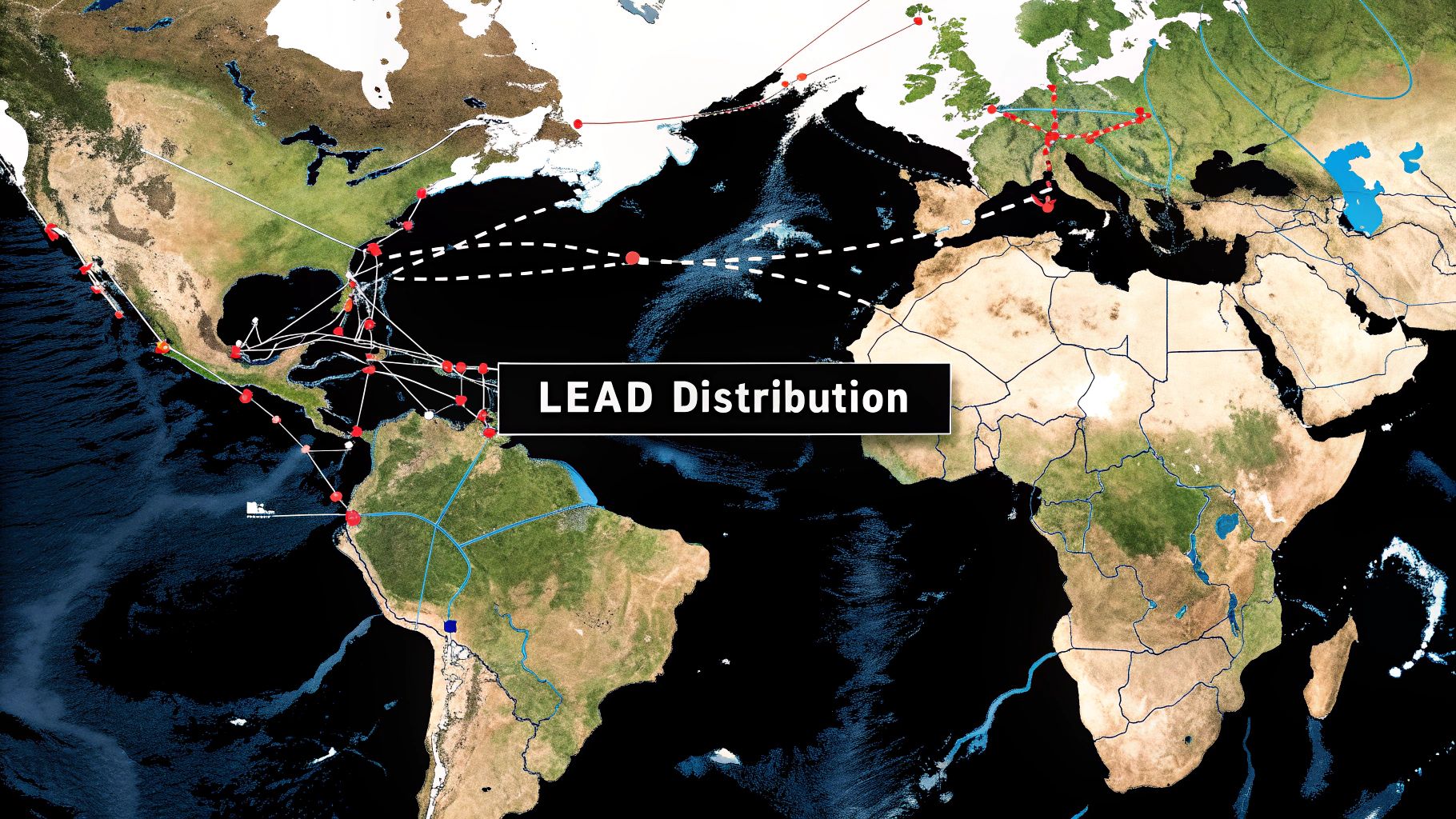
When most of us think of lead, we probably picture a car battery. But the story of how that lead gets into the battery is a globe-spanning epic, starting deep within the earth's crust.
This isn't just a simple A-to-B shipment. It’s a complex, worldwide journey that has massive implications for our economies, our environment, and even our health.
The Global Journey of Lead Explained
Think of the global lead supply chain as a massive, multi-stage expedition. It doesn't kick off in a factory but deep underground, where miners extract lead ore. From there, this raw material travels across the planet, passing through many hands and processes before it ends up in a finished product.
Keeping a close eye on this journey is crucial for a few big reasons:
- Economic Forecasting: If you're building anything from car batteries to massive power grids, you need to know what lead will cost and if you can even get it. Tracking the supply chain helps industries predict this.
- Environmental Safety: Lead can be nasty stuff if it gets into the wrong places. Monitoring its path from the mine all the way to disposal is the only way to manage pollution and protect ecosystems.
- Public Health Policy: Knowing where lead is being used and concentrated helps governments and health organizations step in to reduce exposure, especially for vulnerable communities.
From Mine to Market
The very first step is mining. In often remote parts of the world, miners pull lead ore—usually mixed with other metals like zinc and silver—out of the ground.
That ore is then shipped off to refineries, which are often in entirely different countries, typically major industrial hubs. There, it's smelted and refined into pure lead metal. Only then does it hit the global market, sold and shipped to manufacturers who turn it into thousands of different things. By far the biggest use? Those lead-acid batteries that power nearly every car on the road today.
The whole process—from extraction to refining to manufacturing—is a delicate dance of logistics, economics, and geopolitics. One hiccup, whether it's a trade war or a natural disaster, can send shockwaves through the entire global economy.
Where the World's Reserves Are Found
The world's supply of raw lead isn't spread out evenly. It's actually highly concentrated in just a few key countries, which gives them enormous influence over the entire supply chain.
For instance, China is the undisputed giant, sitting on over 36% of all known lead reserves. Another single country holds nearly 23% of the global supply, which really drives home how concentrated things are. This geopolitical reality means that the stability of the entire market is tied to the economic and political climates in these key nations. For a closer look at the numbers, you can dig into Statista's detailed report on global reserves.
Where the World's Lead Comes From
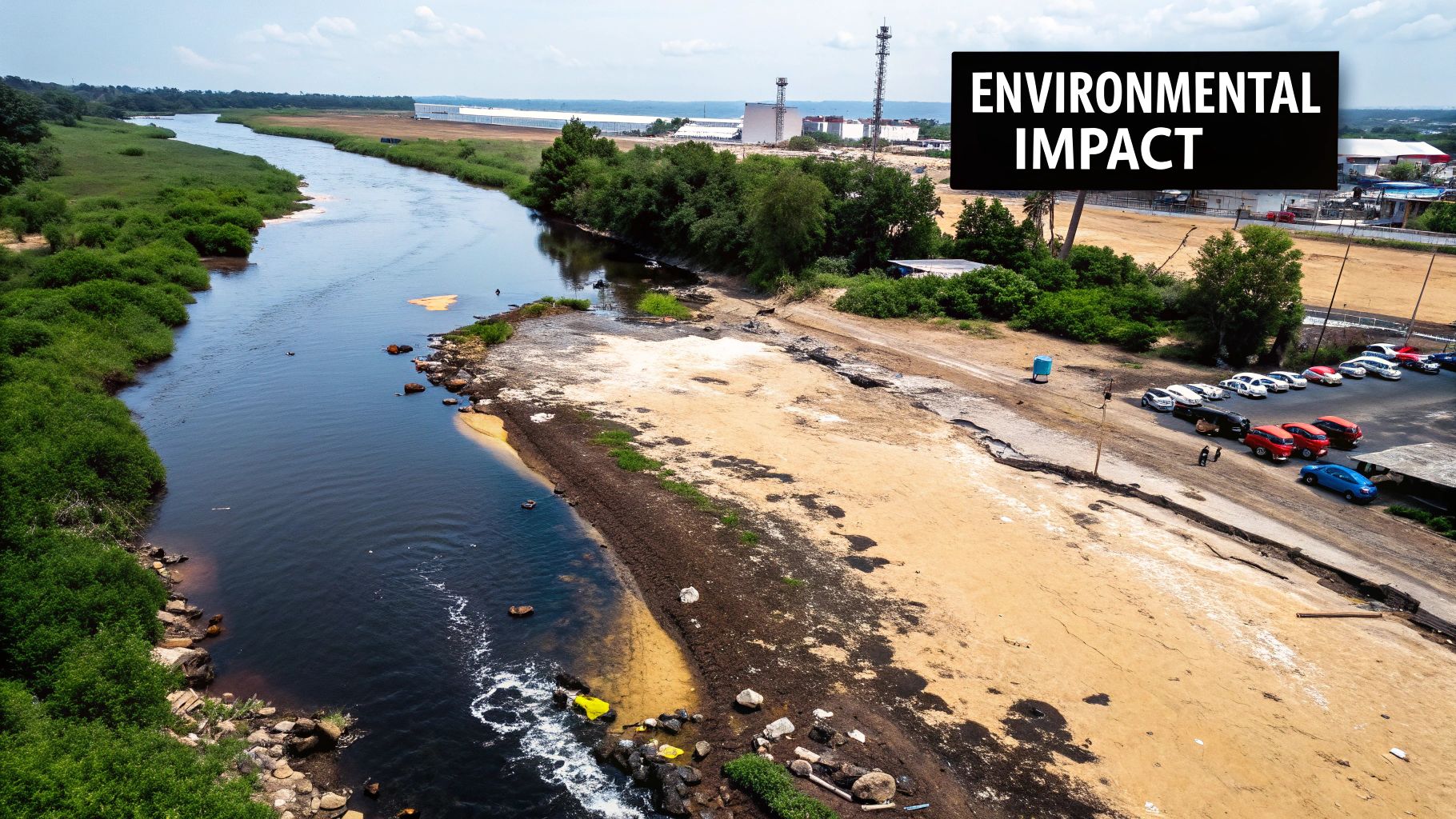
To really get a handle on the global distribution of lead, you have to start at the source: the mines. Lead ore isn't spread evenly across the planet like sand on a beach. Instead, it’s tucked away in specific geological hotspots. These regions are the very beginning of the entire global supply chain, feeding the world's hunger for everything from car batteries to industrial components.
Think of a world map, but forget about cities and country borders for a second. Instead, picture glowing dots marking the planet's most productive lead mines. You’d immediately see a few key areas lighting up. These aren't just holes in the ground; they're massive, complex industrial sites that often form the economic backbone for entire communities.
Global Mining Hubs
When you look at who's actually pulling lead out of the earth, a handful of countries dominate the scene. For decades, these nations have consistently led the pack, establishing themselves as the go-to suppliers for international markets.
The top lead-producing countries are a familiar lineup:
- China: As the world's largest producer by a wide margin, China's output has a massive impact on global prices and availability. What happens in their mines is felt everywhere.
- Australia: Home to several enormous mines, Australia is another heavyweight in the lead game, known for its high-grade ore deposits.
- Peru and Mexico: These Latin American nations are major players with deep roots in mining. They continue to supply a huge chunk of the world's lead.
- United States: While not the top producer, the U.S. has its own significant mining operations, primarily centered in states like Missouri and Alaska.
These countries are responsible for a massive slice of the world's annual lead production. Their mining activities aren't just about digging up metal; they're critical for economic stability and jobs in those regions.
The fact that lead mining is concentrated in just a few countries creates a pretty delicate balance. Any hiccup—whether it's political turmoil, an environmental issue, or economic trouble—in one of these key nations can send shockwaves across the entire global supply chain. Suddenly, prices spike and manufacturers everywhere are scrambling.
This geographical reality is the first, most fundamental piece of the puzzle. It dictates the major trade routes and business relationships that move lead from a mine in one corner of the world to a factory in another.
Following the Lead Trade Routes
Once lead is pulled from the earth, its journey is far from over. It immediately enters a complex, worldwide network of trade routes—think of it like the intricate shipping lanes that move goods across oceans for e-commerce, but for a raw industrial metal. This distribution isn't random; it's a carefully orchestrated flow from major exporting nations to the industrial hubs that desperately need it for manufacturing.
This global trade is constantly shaped by powerful economic forces and significant logistical challenges. On one end, you have commodity traders negotiating massive deals. On the other, shipping giants are coordinating the physical movement of thousands of tons of lead concentrate. The whole system is incredibly sensitive to geopolitics. A new tariff or a sudden shift in a country's industrial policy can reroute the flow of this essential metal almost overnight.
Shifting Tides in Global Demand
The map of who's buying lead is always changing, painting a clear picture of shifts in global industrial power. The trade of lead ores reveals a surprisingly diverse landscape, with 41 countries across multiple continents mining lead concentrates. For years, China was the undisputed king of importers, but its market share has actually dropped by nearly 15% over the last decade.
As China's dominance waned, other players stepped up. South Korea's imports grew significantly during that same period. At the same time, Kazakhstan emerged as a major new importer, showing how industrial demand is actively redistributing where lead ends up. For a deeper dive into these trends, you can explore the full report on world lead dynamics.
The changing tides in lead concentrate trade highlight how dynamic the global market truly is. The table below illustrates some of the major shifts we've seen.
Shifting Tides in Lead Concentrate Trade
| Country/Region | Import Trend Shift | Significance in Global Market |
|---|---|---|
| China | Experienced a ~15% decline in market share over the last decade. | Remains a major player, but its reduced dominance opens the door for other nations. |
| South Korea | Imports have grown significantly in recent years. | Is solidifying its position as a key refining and manufacturing hub in Asia. |
| Kazakhstan | Emerged as a key new importer. | Demonstrates the rise of new industrial centers and changing supply chain patterns. |
This redistribution isn't just a footnote in a trade report; it reflects fundamental realignments in global manufacturing and economic influence.
The infographic below illustrates a critical consequence of this global distribution: human exposure, particularly how it affects different age groups.
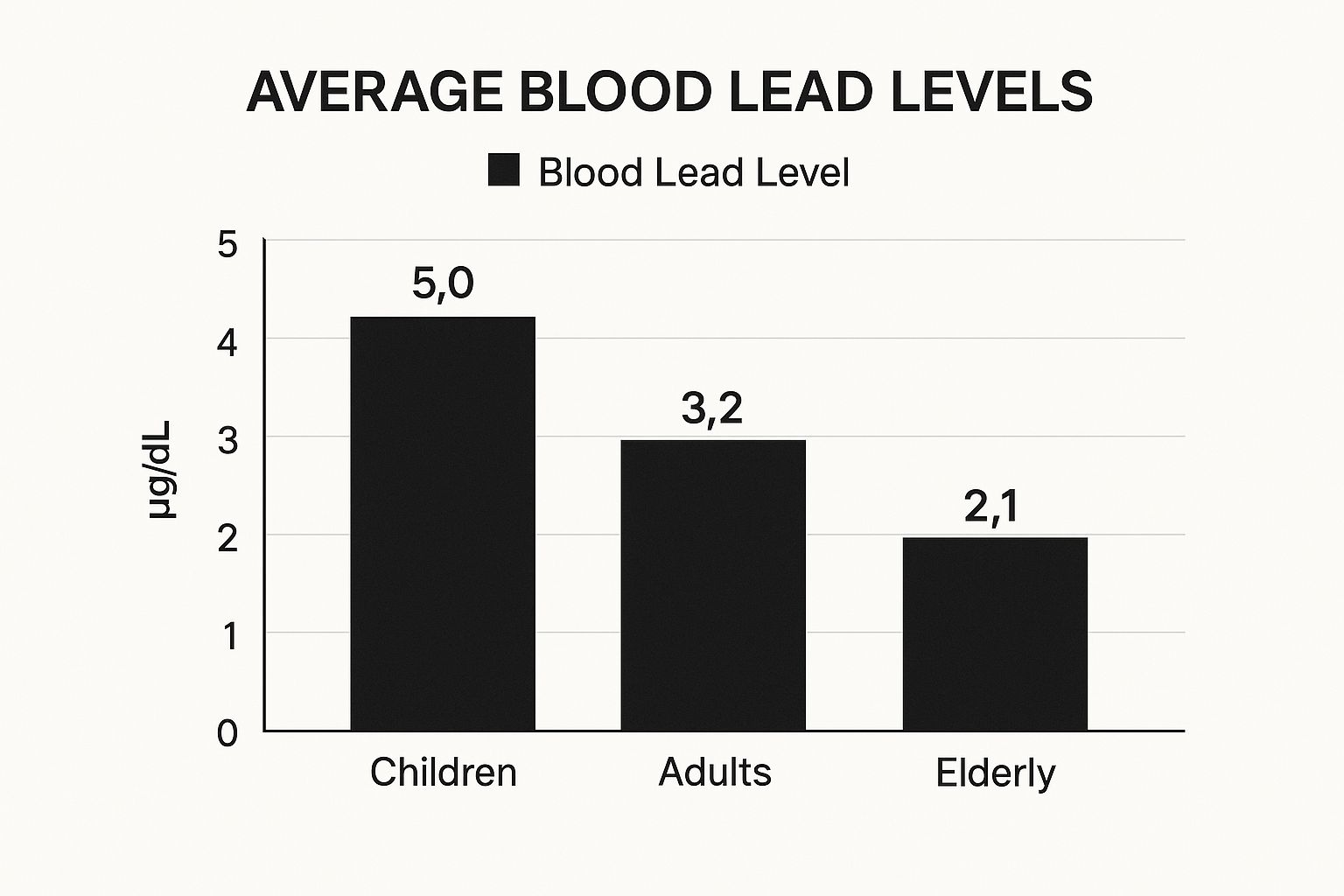
This data makes one thing painfully clear: children have the highest average blood lead levels. It's a stark reminder of their vulnerability to environmental exposure that can happen anywhere along the supply chain, from the mine to the factory.
The Major Players and Pathways
If you were to map out the global movement of lead, a very clear pattern would emerge. On one side of the equation are the major exporting countries, nations that are rich in natural resources.
The primary export hubs are typically the world's top mining nations. They act as the starting point for trade routes that crisscross the globe, supplying the raw materials that fuel industrial economies elsewhere.
On the other side are the big importers—countries with massive manufacturing sectors that refine the raw lead concentrate and transform it into finished goods. These trade routes are the arteries of the global lead market, pumping the lifeblood of industry from resource-rich regions to production centers. Understanding these pathways is the key to grasping not just how lead moves, but the powerful economic forces that direct its journey.
The Human Impact of Lead Distribution
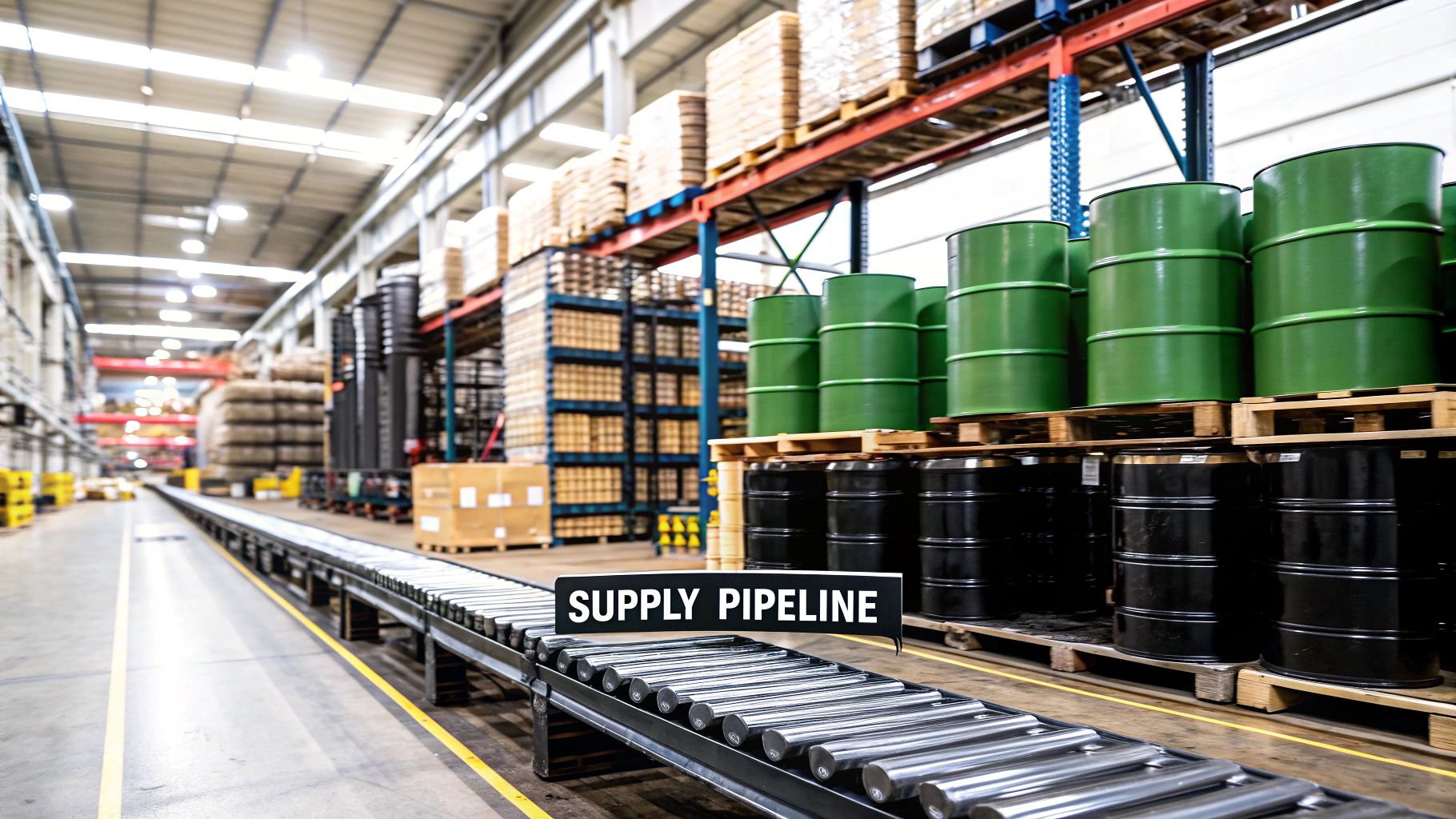
When you hear "lead distribution," you probably think of sales funnels and marketing automation. But there's another, much darker side to that term. The global journey of lead—the heavy metal—is more than an industrial process; it's a human story with devastating public health consequences.
Once lead leaves the controlled confines of a mine or refinery, its distribution stops being a simple supply chain issue. It becomes a matter of life and death. This is where the term distribution of lead transforms from an abstract concept into a real, tangible threat to communities worldwide.
When safety measures are lax or regulations aren't enforced, lead finds its way into the air we breathe, the water we drink, and the soil where our children play. It's an invisible poison, and its effects are not felt equally. Vulnerable populations, especially kids and communities in low- and middle-income countries, bear the brunt of the risk, often living near unregulated recycling sites or dealing with old, decaying infrastructure.
A Staggering Global Health Burden
This isn't a small-scale problem. It's a massive, persistent global health crisis, with the heaviest impact hitting regions where industrial growth outpaces environmental protection.
The numbers are shocking. A 2019 study revealed the highest number of deaths from lead exposure were concentrated in South Asia and East Asia. South Asia saw an estimated 288,270 deaths, while East Asia wasn't far behind with 287,100.
Looking at individual countries, the toll is heartbreaking: China with roughly 282,200 deaths, India with 232,500, and Bangladesh with 30,780. You can dig deeper into these global health findings on PMC. These aren't just statistics; they are families and communities destroyed by a toxin that is entirely preventable.
The Lifelong Consequences of Exposure
The real tragedy of lead poisoning is its permanence, especially in children. There is simply no safe level of lead exposure. Even the tiniest amounts can cause irreversible damage to a child's brain and nervous system as they develop.
The health effects are severe and lifelong:
- Reduced IQ and Learning Disabilities: Lead exposure can permanently lower a child's cognitive function, hobbling their academic performance and limiting their future potential.
- Behavioral Problems: It’s been directly linked to issues like ADHD, aggression, and other behavioral disorders.
- Anemia and Kidney Damage: In both kids and adults, lead can disrupt red blood cell production and inflict serious damage on vital organs like the kidneys.
- Cardiovascular Disease: For adults, long-term exposure dramatically increases the risk of developing high blood pressure, heart disease, and strokes later in life.
The distribution of lead is ultimately a distribution of risk. Where the metal flows, health dangers are sure to follow. Failing to control this flow creates a legacy of suffering that can haunt families for generations, highlighting the urgent need for safer practices and stronger global standards.
For businesses, understanding risk isn't just about environmental impact—it's also about managing your inbound prospects with care and precision. You might be interested in our guide on lead distribution software, which covers strategies for getting opportunities to the right people at the right time. Just like a valuable resource, every lead deserves to be handled efficiently.
Forces Shaping the Flow of Lead
The global market for lead doesn't operate in a vacuum. A complex cocktail of powerful economic, technological, and regulatory forces are constantly shaping its flow, dictating who buys, who sells, and at what price. When you look past simple supply and demand, you uncover a dynamic ecosystem where a single change can send ripples across the entire supply chain.
Think of it like a river. The source (mines) and destination (factories) might seem straightforward, but its actual path gets rerouted by dams, droughts, and sudden storms. In the lead market, these disruptions show up as new government policies, technological breakthroughs, or geopolitical flare-ups.
A perfect real-world example was the global phase-out of leaded gasoline. That single environmental regulation permanently torpedoed a huge chunk of demand, forcing the entire industry to pivot.
The Influence of Policy and Technology
Environmental and economic policies are, without a doubt, some of the biggest drivers influencing the distribution of lead. Regulations designed to protect public health and the environment have completely changed the game for how lead is used, recycled, and disposed of.
At the same time, technology is creating new battlegrounds. The explosion of electric vehicles (EVs) is a fantastic example. While the cars we’ve driven for a century rely on lead-acid batteries, most modern EVs run on lithium-ion technology. This tech showdown is a major force reshaping future demand and steering investment dollars.
The interplay between these forces creates a ton of market volatility. A new environmental law in one country can slash demand, while a subsidy for EVs in another can shift it entirely. Getting a handle on this dynamic is absolutely essential for navigating the lead market.
For sales teams, managing volatile inbound interest requires a similar level of strategic thinking. To make sure every opportunity is handled correctly, top-performing teams rely on proven lead routing best practices, which we cover in detail in our complete guide.
Key Drivers of the Global Lead Market
Let’s break down the primary forces at play to get a clearer picture. These factors rarely work in isolation; they often combine to create complex scenarios that can throw the market for a loop. Geopolitical friction, for instance, can choke off supply chains almost overnight, while new economic policies can either pump up or deflate demand.
The table below gives you a snapshot of these key drivers and their direct impact on the distribution of lead.
| Factor Category | Specific Driver | Impact on Distribution |
|---|---|---|
| Regulatory | Environmental Laws (e.g., emissions standards) | Restricts certain uses, increases recycling demand, and alters trade flows to regions with stricter or looser rules. |
| Technological | Battery Competition (Lead-Acid vs. Lithium-Ion) | Shifts long-term demand away from or towards lead, influencing investment in mining and refining capacity. |
| Economic | Tariffs and Trade Agreements | Can make lead from certain countries more expensive, redirecting supply chains and creating new trade partnerships. |
| Geopolitical | Supply Chain Instability | Political conflict or instability in major producing nations can cause immediate shortages and price spikes globally. |
The Future of Global Lead Distribution
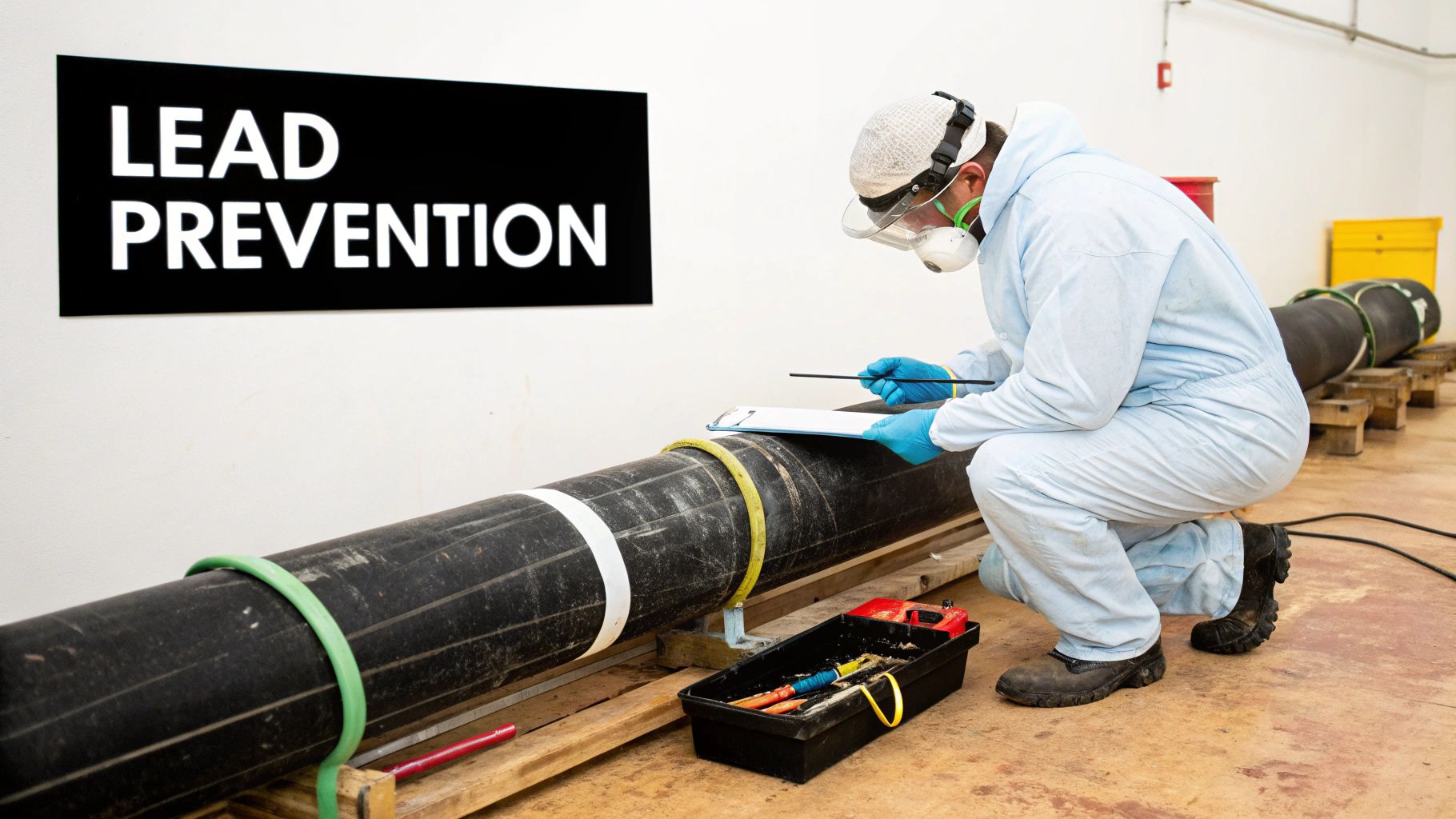
The global pathways for the distribution of lead are heading for some major shifts. Looking ahead, the industry is pivoting toward a more circular model, a move that’s being pushed by both economic common sense and a growing environmental conscience. This isn't just about digging new mines; it's about completely rethinking where our lead comes from in the first place.
One of the most significant forces behind this change is the boom in recycling. Used lead-acid batteries are rapidly becoming a vital "secondary" source of lead. What this does is create a closed-loop system where old products are fed back into the supply chain, which drastically cuts down on the need for new mining. This isn't just good for the planet—it's a smart economic move that builds a far more stable and predictable supply chain.
New Demands from Green Energy
The worldwide push for green energy is also shaking up the market. While lithium-ion batteries tend to steal the spotlight, the humble lead-acid battery is still a workhorse for large-scale energy storage, like the systems you see at solar and wind farms. This is creating a wave of new demand, but it comes with its own set of challenges.
As renewable energy grids get bigger, so does the need for reliable, cost-effective battery storage. This puts the lead industry in a prime position to support the transition to a sustainable energy future. The real trick will be balancing this fresh demand with the increasingly tough international standards for safe handling and recycling.
The future of lead distribution is really a story of adaptation. It’s about building a more responsible and resilient supply chain that can rise to the challenges of a changing world—from powering green energy grids to implementing smarter, safer recycling protocols.
For any business, adapting to this kind of change means getting every part of your operation right, and that includes how you manage your prospective customers. Learning the ropes of effective inbound lead generation can give you the blueprint for creating a resilient and efficient sales pipeline, ensuring no opportunity gets left behind.
We've walked through the entire journey of a lead, from the moment it's created to when it lands in a sales rep's hands. But a few common questions always seem to pop up. Let's tackle those head-on to clear up any lingering confusion about lead distribution.
What’s the Difference Between Lead Distribution and Lead Generation?
It's easy to mix these two up, but they're completely different stages of the sales process.
Lead generation is all about casting a wide net. It’s the art of attracting potential customers and getting them to raise their hand, signaling that first spark of interest. Think of it as opening the very top of your sales funnel.
Lead distribution, on the other hand, is what happens next. It’s the crucial, strategic process of taking those interested prospects and assigning them to the right sales rep for a conversation. Get this part wrong, and all that hard work in generation goes to waste.
Why Is Manual Lead Distribution So Inefficient?
Look, if you have a tiny team and just a handful of leads, manually assigning them might feel manageable. But it falls apart fast. This approach is a huge time-suck, it’s loaded with potential for human error, and worst of all, it creates delays. In sales, speed is everything.
Automated systems route leads the instant they come in, using rules you’ve already set. This keeps things fair, fast, and frees up managers from playing traffic cop. More importantly, it lets your reps connect with prospects while they're still hot, which can dramatically boost your chances of actually closing a deal.
The biggest problem with doing it by hand? It simply doesn't scale. As your company grows, the time you burn just assigning leads grows right along with it, and you'll watch opportunities disappear in the rearview mirror.
What Are the Most Common Lead Distribution Strategies?
There are a few battle-tested strategies out there, and the best one for you really depends on your team's structure and what you're trying to achieve.
Here are some of the most popular ways to do it:
- Round Robin: This is the go-to for fairness. It simply rotates through your reps, giving each one a lead in turn. It’s straightforward and works great for teams where everyone has a similar skill set.
- Skills-Based Routing: This is a bit more sophisticated. You route leads to reps who have a specific talent, like deep product knowledge or experience in a certain industry. The goal here is to match the lead with the rep most likely to convert them.
- Geographic Targeting: Perfect for teams with field reps or those that rely on local expertise. This method sends leads to the rep who covers that specific city, state, or region.
Ready to stop letting high-intent leads slip through the cracks? Distro automates your lead routing, ensuring every demo request gets to the right rep instantly. See how our intelligent scheduling can triple your conversion rates.