
Understanding Round Robin Meetings: The Democracy of Discussion
Imagine your most chaotic team discussions transforming into structured conversations where every voice is heard. A round robin meeting is a format designed to ensure everyone gets a turn to speak. Think of it like a pass-the-mic session; the spotlight moves from one person to the next, giving each participant a dedicated, uninterrupted moment to share their thoughts, updates, or ideas. This turn-based approach fundamentally changes team communication, shifting away from a free-for-all where the loudest voices tend to dominate.

This method tackles the common issue of a few personalities guiding the entire conversation. Instead, it creates intentional space for quieter or more thoughtful team members to contribute their valuable insights. The round robin format is especially helpful for modern teams dealing with remote work, diverse communication styles, and complex problems that require every available perspective. It’s a system built on equal participation, a key to unlocking a team's full collective intelligence.
The Psychology of Equal Airtime
The effectiveness of a round robin meeting goes beyond just its process; it taps into the psychological drivers of team performance. When people know their turn is coming, they listen more intently to others, framing their own contributions based on what's already been shared. This is a stark contrast to typical meetings where participants might just be waiting for a chance to jump in, leading to interruptions and lost ideas. This structured flow promotes fairness and respect, which helps build psychological safety—a critical component for fostering innovation and honest feedback.
The sheer number of meetings highlights the need for better formats. In the United States alone, an estimated 11 million meetings take place every day. With so much time invested, making them productive is crucial. Structured methods like the round robin are designed to optimize this time. This is particularly important when you consider that 45% of meetings are around 30 minutes long, a timeframe that requires focus and balanced contributions to be worthwhile. You can explore more data on work habits by reviewing these 50 insightful meeting statistics on flowtrace.co.
Core Components of a Round Robin Meeting
While the concept is straightforward, a successful round robin meeting depends on a few key components. These elements provide the structure that ensures both fairness and focus.
- Pre-Defined Order: A clear speaking order is set before the meeting starts. This could be alphabetical, based on where people are sitting, or follow a project workflow. The important thing is that the sequence is known and followed.
- Time Allocation: Each speaker is usually given a specific amount of time. This practice prevents any one person from dominating the conversation and encourages everyone to be concise.
- A Clear Prompt or Question: The meeting is centered on a specific topic or question that each person addresses. For example: "What is your top priority this week?" or "What is one roadblock you are facing on this project?"
By putting these elements into practice, organizations can build a more inclusive and effective communication culture. The principles of this meeting style are even applied in automated systems, such as the software used for round robin scheduling, which distributes tasks or sales leads fairly among team members.
The Hidden Power of Equal Participation
What really happens when every person in the room gets an equal chance to speak? The effect of a round robin meeting goes far beyond basic fairness, creating powerful and often surprising benefits for your team's culture and operations. By giving everyone a dedicated slot to contribute, this format systematically breaks down the common anxieties that keep great ideas from being shared.
This structured approach builds genuine psychological safety—a state where people feel secure enough to share half-formed ideas, ask questions, and even challenge the group without fearing they'll be interrupted or judged. It’s particularly effective for introverted or more thoughtful team members, who often find it hard to jump into a fast-moving, unstructured discussion.
Unlocking Innovation and Preventing Groupthink
One of the biggest wins of structured participation is its power to bring new solutions to light. In a typical meeting, the first few ideas shared often create an anchor point, influencing everyone else to think along the same lines. This effect, known as groupthink, can quickly shut down creativity and lead to weak decisions.
A round robin meeting naturally disrupts this. Because each person speaks one by one, a much wider variety of ideas gets introduced. An engineer will see a problem differently than a marketer, and a new hire’s fresh eyes might hold the key to a persistent challenge. When these different views are given equal airtime, the group's collective intelligence shines, leading to stronger, more creative results. For a deeper look at ensuring everyone has a fair chance to contribute, you can learn more about meeting equity.
Improving Decision Quality and Team Cohesion
The advantages of equal participation lead directly to better, smarter decisions. When a wider range of data, risks, and opportunities is on the table, leaders can make choices with more confidence. This is a massive improvement over decisions based only on the opinions of the loudest people in the room.
To see the difference clearly, let's compare the two formats.
Traditional Meetings vs Round Robin Meetings Comparison
A detailed comparison showing participation rates, time efficiency, and outcome quality between traditional and round robin meeting formats
| Aspect | Traditional Meetings | Round Robin Meetings | Improvement |
|---|---|---|---|
| Participation | Dominated by 2-3 vocal individuals | 100% of attendees have a turn to speak | Ensures full team involvement |
| Idea Generation | Prone to groupthink and anchored ideas | Surfaces diverse and unique perspectives | Fosters creativity and innovation |
| Decision Quality | Based on limited, often biased, input | Informed by comprehensive team-wide insights | Leads to more robust outcomes |
| Psychological Safety | Lower; fear of interruption or judgment | Higher; guaranteed space builds confidence | Creates a more open environment |
| Team Cohesion | Can create resentment and disengagement | Builds respect and a sense of shared ownership | Strengthens team bonds |
As the table shows, the improvements are significant. The structured nature of a round robin meeting doesn't just manage time—it builds a culture of respect.
When team members consistently see that their voice is not only welcome but expected, it strengthens their relationships and creates a powerful feeling of shared purpose and ownership over the final outcome.
When Round Robin Meetings Work Best: Strategic Applications
Not every meeting needs the turn-based structure of a round robin, but knowing when to use this format can dramatically improve a team's effectiveness. This approach isn't a one-size-fits-all solution. Instead, think of it as a specialized tool you pull out for specific situations where balanced participation is non-negotiable.
The core idea of the round robin format comes from tournament play, where every team gets a chance to compete against every other team. This diagram from a Wikipedia article on round-robin tournaments shows how each participant gets a turn in a structured cycle.
Just as the tournament structure gives every team a fair shot, the round robin meeting ensures every person has a chance to speak. This methodical approach to inclusion is what makes it so useful for certain business challenges.
High-Impact Brainstorming Sessions
For creative ideation, a round robin format can be a game-changer. Traditional brainstorming often gets hijacked by the first few ideas or the most outgoing people, which can lead to groupthink. A round robin meeting forces the team to slow down and listen to every single idea, from the simple to the unconventional.
This process frequently uncovers surprising connections and new solutions that might have been missed in a less structured, free-for-all discussion.
Honest Project Retrospectives and Post-Mortems
After a project wraps up, collecting honest feedback is crucial for getting better next time. But team members can be hesitant to speak up, especially if things didn't go perfectly. The round robin format creates a safe, structured space for these important conversations.
By asking each person to share one success and one challenge, you guarantee that all views are heard—from the project lead to the junior designer. This systematic approach provides a 360-degree view of the project, exposing blind spots and revealing key lessons for the future.
Strategic Planning and Decision-Making
When the stakes are high, like during annual strategic planning, a round robin meeting ensures all viewpoints are on the table before a big decision is made. By going around the room to gather input on key initiatives, risks, and opportunities, leaders can avoid the trap of a narrow strategy.
For example, a sales leader might see a market opportunity that the product team missed, while an engineer could point out a technical issue that affects a proposed timeline. This creates a more robust and realistic plan.
When to Avoid the Round Robin Format
On the flip side, this format isn't the best fit for every meeting. It's generally not the right choice for:
- Quick Daily Stand-ups: These meetings are designed for rapid updates, and a formal round robin can feel slow and overly rigid.
- Informational Meetings: If the goal is simply to share information from one person to the group, like a company-wide update, a turn-based discussion is not needed.
- One-on-One Check-ins: These meetings are dialogues between two people and don't require this type of multi-person structure.
Ultimately, the power of a round robin meeting is in its deliberate application. When used for the right reasons, it becomes a valuable tool for building consensus, sparking new ideas, and driving smarter business outcomes.
Your First Round Robin Meeting: From Planning to Execution
Jumping into your first round robin meeting can feel like moving from a casual pickup game to an organized sport. The rules might seem rigid at first, but they are what unlocks higher performance. Success depends on thoughtful planning and confident execution. This guide breaks down the process, turning potential awkwardness into a structured, productive conversation. From setting expectations to managing the flow, every step is designed to make your initial attempt a clear win for your team.
Setting the Stage: The Invitation and Agenda
Your preparation begins long before anyone joins the call. The meeting invitation is your first chance to set the tone and manage expectations. Avoid sending a generic calendar block. Instead, create an invitation that clearly explains the round robin format.
Let participants know that everyone will have a dedicated, timed slot to speak on a specific topic. This simple act of transparency helps everyone arrive prepared. For example, your invitation could state: “We’ll be using a round robin format for this brainstorming session. Please come prepared to share one key opportunity you see for our Q3 launch in a two-minute window. We will go in alphabetical order.” This primes your team for focused, concise contributions.
The agenda is just as important. It should be built around a single, powerful question or prompt that each person will answer. A well-designed prompt is the engine of the meeting.
- For Brainstorming: "What is one unconventional idea to solve X?"
- For Project Updates: "What is the most critical task you completed this week, and what is one blocker you are facing?"
- For Retrospectives: "Share one thing that went well and one thing we can improve."
During the Meeting: Facilitation and Timing
Once the meeting starts, the facilitator’s role becomes central. You are not just a participant; you are the conductor ensuring the conversation stays on track and maintains its rhythm. Start by briefly restating the rules: the speaking order, the time limit per person, and the central question.
A visual timer that everyone can see is your best friend. It externalizes the time constraint, making it feel less like a personal interruption and more like a shared rule of the game. When a participant’s time is up, a gentle verbal cue works best. Try something like, “Thanks, Sarah! Great points. To keep us on schedule, we’ll need to move to the next person.” This approach respects the speaker while upholding the structure. For more insights on efficient planning, you can learn more about the best way to schedule meetings.
To ensure every phase of your meeting is covered, from initial planning to post-meeting actions, a detailed checklist can be incredibly helpful.
Round Robin Meeting Setup Checklist A comprehensive checklist covering pre-meeting preparation, during-meeting facilitation, and post-meeting follow-up actions.
| Phase | Action Items | Time Required | Responsible Party |
|---|---|---|---|
| Pre-Meeting | Define the core question or prompt. | 15-20 minutes | Meeting Host |
| Create and send a detailed invitation. | 10 minutes | Meeting Host | |
| Prepare a shared document for notes. | 5 minutes | Notetaker | |
| During Meeting | Briefly reiterate rules and format. | 2 minutes | Facilitator |
| Manage a visual timer for all to see. | N/A | Facilitator | |
| Capture key points and action items. | Ongoing | Notetaker | |
| Post-Meeting | Distribute summary and action items. | 15-30 minutes | Notetaker/Host |
| Follow up on assigned tasks. | As needed | Task Owners | |
| Gather feedback on the meeting format. | 5 minutes | Meeting Host |
This checklist provides a clear roadmap, turning the abstract concept of a well-run meeting into a series of manageable steps. Following this structure builds confidence and ensures no critical detail is missed.
After the Whistle: Follow-Up and Action Items
The value of a great discussion is lost if it doesn't lead to action. The structured nature of a round robin meeting makes capturing action items remarkably clean. As the designated notetaker documents each person's contribution, key tasks and decisions naturally emerge.
This simple process flow visualizes the core mechanics of running the meeting itself.
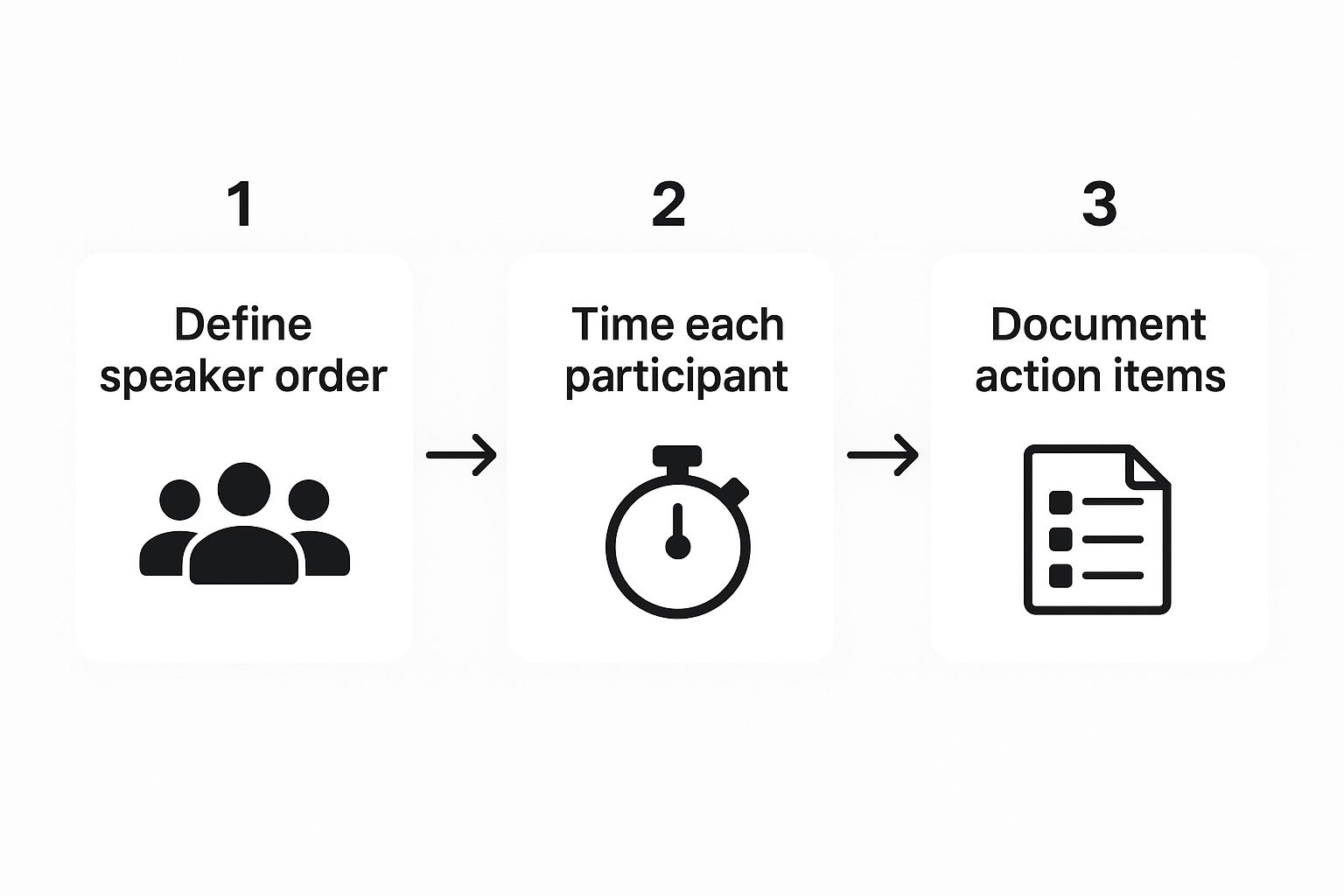
The visualization underscores that success lies in a linear, predictable sequence that respects both order and time to generate clear outcomes. Immediately after the meeting, send out a summary that includes the key ideas shared and a list of action items with assigned owners and deadlines. This reinforces the value of everyone's contribution and transforms talk into tangible progress, setting a powerful precedent for future sessions.
Mastering Virtual Round Robin Meetings: Remote Excellence
The move to distributed teams has made the round robin meeting more than just a useful technique; it's now a fundamental tool for effective collaboration. However, running these structured sessions in a virtual setting brings its own unique set of challenges and opportunities. Without the physical cues of an in-person meeting, facilitators need to be more intentional about guiding the conversation, managing technology, and keeping everyone engaged across different locations.
Successfully adapting this format for video calls is all about creating an online space where every voice can contribute clearly and without friction.
The rapid growth of remote work has cemented the need for fair meeting structures. Between 2020 and 2022, the percentage of virtual meetings worldwide shot up from 48% to 77%, a shift largely driven by the pandemic. This highlights just how much teams rely on formats like the round robin to manage participation when the natural flow of conversation is harder to come by. You can find more details about this trend in these meeting statistics from Notta.ai. For anyone leading virtual round robins, mastering the digital space is a direct investment in team productivity and morale.
Key Strategies for Virtual Success
To make a virtual round robin meeting work, you need a combination of proactive facilitation and smart use of technology. Simple adjustments can prevent common frustrations like awkward silences or technical glitches that stop a meeting in its tracks.
Here are a few proven strategies:
- Set Clear Digital Ground Rules: Before you begin, establish the norms for the virtual space. This could include asking participants to mute themselves when not speaking, using the "raise hand" feature for questions, and encouraging everyone to keep their cameras on to build a sense of presence.
- Use Breakout Rooms: For larger groups, a single round robin can feel like it takes forever. Split the team into smaller, simultaneous round robin sessions using breakout rooms. For example, a team of 16 can be divided into four groups of four. This approach gives you the benefit of equal participation while keeping the energy up.
- Work with Digital Collaboration Tools: A shared digital whiteboard or a collaborative document can be a game-changer. As each person shares, a designated notetaker can capture key ideas for everyone to see in real-time. This creates a visual anchor for the discussion and makes sure good ideas don't get lost.
Handling Common Virtual Challenges
Even with careful planning, virtual meetings have their own pitfalls. Dominant personalities might still try to interrupt, and that "virtual silence" can feel much more intense than it does in person.
To get ahead of these issues, plan your response:
| Challenge | Solution |
|---|---|
| Technical Difficulties | Always have a backup plan. If a participant's connection drops, calmly move to the next person and circle back later. This keeps the meeting on track. |
| Participant Disengagement | Actively call on the next person by name to draw their attention. A simple, "Great points, John. Maria, you're up next," works wonders. |
| Managing Time Zones | When scheduling, use tools that display availability across different time zones to find a slot that's reasonable for everyone involved. |
By anticipating these challenges and having clear strategies in place, you can turn a potentially chaotic video call into a productive and inclusive experience. Exploring resources on effective virtual meetings can give you even more tactics to help your remote team perform at its best.
Troubleshooting Common Round Robin Meeting Challenges
Even the most carefully planned round robin meeting can encounter a few bumps. While the format is built for fairness, human dynamics and everyday issues can sometimes create friction. Recognizing these common roadblocks is the first step to keeping your meetings productive and positive. When you know what to look for, you can prepare solutions that keep things moving without losing the format's core benefits.
The Dominant Personality
One of the most common challenges is dealing with a participant who struggles to stick to the rules. This person might interrupt others, talk well past their allotted time, or try to debate points when it isn't their turn. This kind of behavior can erode the sense of psychological safety the round robin is supposed to build.
Solution: The facilitator's role is critical here. Before the meeting begins, firmly but politely go over the ground rules, paying special attention to time limits. Using a visible timer can make timekeeping feel less personal. If someone interrupts, you can gently step in with a phrase like, “That’s a great point. Let’s save it for the open discussion at the end. [Next Person], you’re up.” This reinforces the structure without sparking conflict.
Unprepared Participants
Another frequent issue is when team members show up unprepared. When it's their turn to speak, they might say, "I have nothing to add," or offer vague thoughts without real substance. This wastes their turn and the team’s time, which can lead to frustration and make others doubt the meeting's purpose.
Solution: The best approach is prevention, which often starts with the invitation itself. Make sure your meeting invitation format is perfectly clear about the goal and what each person needs to bring to the table. As detailed in our guide on this topic, a well-written invitation sets expectations and encourages everyone to prepare. For instance, a simple, direct instruction like, "Please come ready to share one specific data point on X," can turn passive attendees into engaged contributors.
The Structure Feels Forced
Sometimes, a team may resist the round robin format because it feels too rigid, especially in creative environments where spontaneous brainstorming is the norm. If the structure feels more like a constraint than a helpful tool, engagement will likely drop, and the meeting can start to feel mechanical.
Solution: Don't be afraid to adapt. A round robin meeting doesn't have to be an all-or-nothing system. Try a hybrid model. Use the round robin for the initial information-sharing phase to guarantee every voice is heard. Afterward, open the floor for a more traditional, free-flowing discussion based on the ideas that were shared. This approach gives you the best of both worlds: structured input followed by organic collaboration. Remind your team that the structure is just a tool to ensure fairness, not to shut down creativity.
Your Round Robin Meeting Action Plan: An Implementation Roadmap
Changing your company’s meeting habits takes more than just announcing a new format. It requires a clear, step-by-step approach. This roadmap will help you introduce, measure, and grow the round robin meeting format in your organization, building real support as you go.
Think of it as a journey, moving from a single successful meeting to a widespread cultural shift. The idea is to be deliberate, proving the value at each stage to create lasting change that your teams will actually appreciate.
Phase 1: The Pilot Program (Weeks 1–4)
The best way to start is to start small. Don't try to change every meeting overnight. Instead, pick one or two recurring meetings that seem like perfect candidates for the round robin style. A project retrospective or a weekly brainstorming session where equal participation is key are great places to begin.
- Action Item: Prepare Your Team. Let the selected team know you're running a pilot. Position it as an experiment to make meetings more fair and productive. You can tackle any worries head-on by saying something like, “We’re testing a round robin meeting format for our next four retrospectives to ensure everyone gets to share their thoughts without being talked over. We’ll ask for your feedback after each one.”
- Action Item: Define Success Metrics. Before you even start, decide what a successful pilot looks like. Key metrics could include:
- Participation Rate: Your goal should be 100% of attendees contributing.
- Actionable Outcomes: Count the number of clear action items produced in each meeting.
- Qualitative Feedback: Use a quick post-meeting survey asking attendees to rate its effectiveness on a 1-to-5 scale.
Phase 2: Gather Feedback and Refine (Weeks 5–8)
After a month, you'll have solid data and firsthand experiences. Now it's time to dig into the results and polish your method. This is your chance to win over any skeptics by showing them real, measurable improvements.
- Action Item: Review and Share Data. Present the metrics from your pilot to the team and key stakeholders. Point out the wins, like hearing more ideas from quieter team members or making decisions faster. For instance, you could report, “Since trying the round robin format, our retrospectives have generated 30% more actionable improvement ideas.”
- Action Item: Create Reusable Templates. Using what you've learned, build a simple template. This could be a document with suggested wording for the meeting invitation, a sample agenda with a clear prompt, and a short checklist for facilitators. This makes it much easier for other teams to try the format correctly.
Phase 3: Strategic Expansion (Weeks 9+)
With a proven model and positive feedback in hand, you can start expanding the round robin meeting format. This growth should be encouraged, not forced. Nudge other team leads to try it for specific situations where it fits, and give them your templates and key takeaways.
As more teams adopt the format, the culture will naturally shift toward more inclusive and focused conversations. This change will be driven by proven results, not a top-down order.
Automating the scheduling process is a great way to support this expansion. Tools like Distro make it simple to apply round robin principles not just to internal meetings but to customer interactions, too. By automatically sending new leads to the next available sales rep, Distro ensures fair distribution and quick response times, turning potential chaos into a smooth conversion process.
See how Distro can bring round robin efficiency to your sales process.