
To really create urgency in sales, you have to get inside your prospect's head and understand what makes them tick. It’s not about pushy tactics; it's about tapping into powerful psychological triggers like the Fear of Missing Out (FOMO) and loss aversion.
The secret is to frame your offer as a genuine, time-sensitive opportunity. When you do this right, you’re not pressuring them—you’re empowering them to make a smart, timely decision.
The Psychology of Genuine Urgency
Let's start with a simple truth about human nature: people are far more motivated by the fear of losing something than by the idea of gaining something of equal value. This is a well-known concept called loss aversion, and it's a massive driver of our behavior.
When a prospect realizes that a great price, a valuable bonus, or a special offer might disappear, something clicks. They're psychologically wired to act more decisively to avoid that potential loss.
Your goal isn't to invent fake pressure. It’s to shine a spotlight on the real, built-in value that's tied to a specific timeframe or limited availability. This completely changes the conversation. You go from being a pushy salesperson to a helpful advisor, simply letting them know the situation so they can make the best choice for themselves. That’s how you build trust.
Shifting from Pressure to Empowerment
Ethical urgency gives customers all the information they need to grab a great opportunity. It feels helpful, honest, and transparent. High-pressure tactics, on the other hand, just make people feel cornered and often lead to buyer's remorse, which poisons any chance of a long-term relationship. The real difference comes down to your intent and how you communicate it.
Think about these two motivators:
- Fear of Missing Out (FOMO): We all know this one. It’s that nagging feeling you get when you see others enjoying something you might miss out on. In sales, this is what a prospect feels when they see other businesses benefiting from an offer that's about to expire.
- Scarcity: When something is limited, its perceived value shoots up. This could be about quantity (only a few slots left) or time (offer ends Friday).
Combining scarcity with urgency is a proven recipe for boosting conversions. For instance, a popular fashion retailer saw a 15% jump in its conversion rate just by adding a "low-stock" warning to a popular item. This is a classic application of Dr. Robert Cialdini's principle of scarcity. It taps directly into that fear of missing out, pushing customers to act. If you want to dive deeper, you can discover more insights about psychological triggers on steplabs.xyz.
It's crucial to understand the line between creating genuine value and just being aggressive. One builds relationships, the other breaks them.
Ethical Urgency vs High-Pressure Tactics
| Tactic Type | Ethical Urgency (Good) | High-Pressure Tactic (Bad) |
|---|---|---|
| Focus | Highlighting the inherent value and benefits of acting now. | Creating artificial pressure to force a quick decision. |
| Example | "Our onboarding team has two slots open next week to get you started." | "You have to sign today, or the deal is off the table." |
| Customer Feeling | Empowered, informed, smart. | Anxious, rushed, manipulated. |
| Outcome | Builds trust and long-term loyalty. | Leads to buyer's remorse and damages brand reputation. |
Focusing on ethical urgency ensures you're helping your customer make a good decision for them, which is always the best long-term strategy.
The art of creating urgency is not about making a prospect feel rushed; it's about making them feel smart for acting decisively on a valuable opportunity.
Still not convinced? The impact is clear when you look at the numbers. Applying these principles doesn't just give you a small lift—it can dramatically shorten the sales cycle and improve conversion rates.
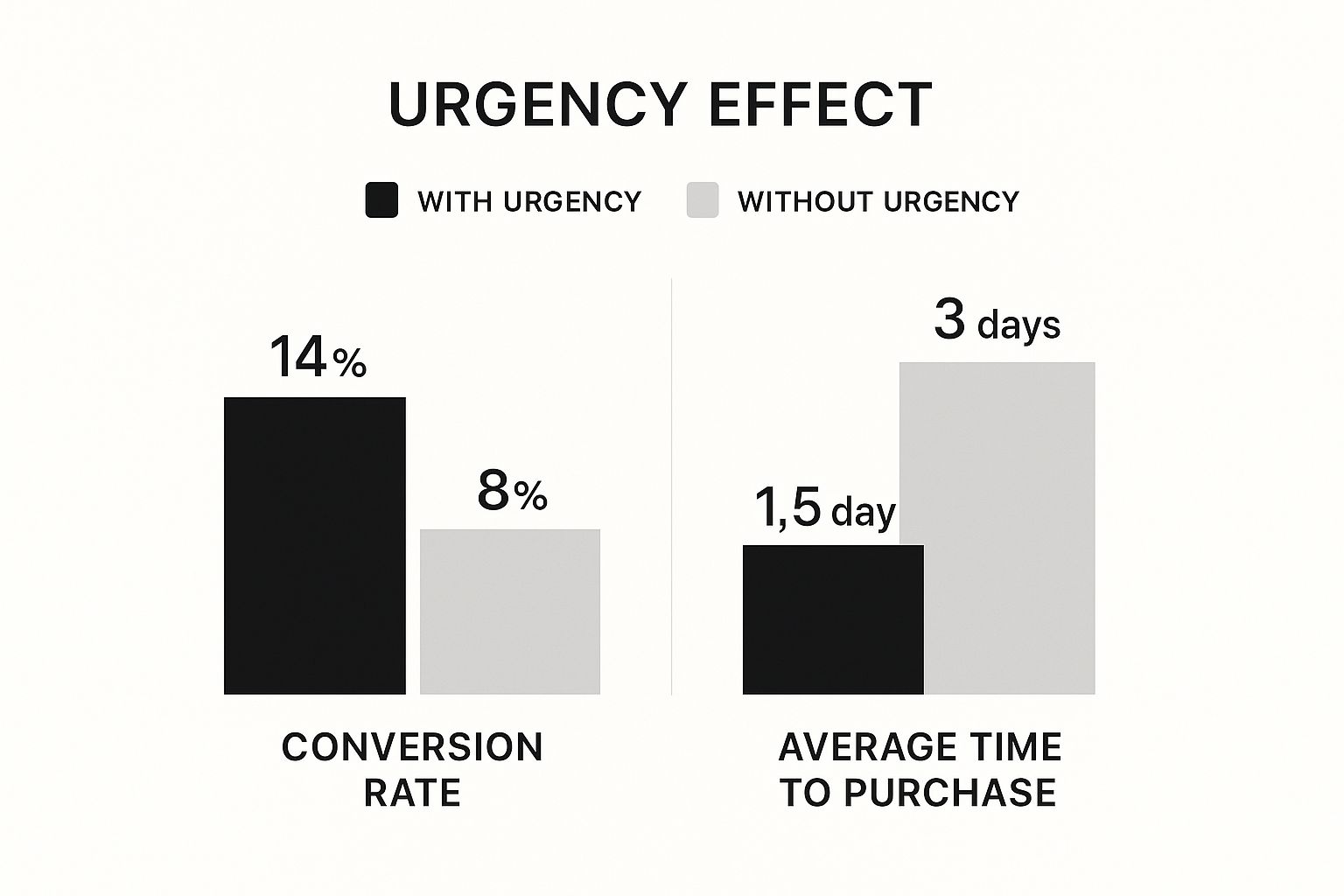
The data speaks for itself. Urgency doesn't just give prospects a little nudge; it significantly speeds up the entire sales process and can nearly double your chances of closing the deal.
Using Time-Based Triggers Effectively
Time is your most powerful ally when creating urgency, but it’s not about just slapping a countdown timer on your website and calling it a day. The real art is in using time-based triggers with integrity to frame a decision as a smart, timely opportunity—not a forced choice. This whole approach hinges on highlighting what a prospect stands to gain by acting now.

The secret? Your deadline needs to be tied to a legitimate reason. It could be anything from a seasonal promotion or an upcoming price change to a limited bonus you’re offering to hit a business goal. When the deadline makes sense, it feels less like a sales gimmick and more like a helpful heads-up.
Frame Deadlines as Opportunities for Extra Value
Stop telling prospects what they’ll lose. Start showing them what they stand to gain.
This small shift in language changes everything. You aren't taking something away; you're offering something extra for a limited time. It's a positive spin that encourages action without making anyone feel anxious or backed into a corner.
Here are a few ways to put this into practice:
- Limited-Time Bonuses: Offer a genuinely valuable add-on, like free premium onboarding or an exclusive training session, for anyone who commits within a set window. "Just so you know, our dedicated onboarding bonus is available for anyone who signs on this week."
- Seasonal Promotions: Tie your offers to holidays, seasons, or industry events. This gives you a natural, understandable reason for the deadline that doesn’t feel random.
- Price Increase Announcements: Be upfront about an upcoming price adjustment. Giving prospects a chance to lock in the current rate is a huge motivator that feels fair and respectful.
This strategy respects the customer’s intelligence and positions you as a transparent partner. It’s a simple change that can dramatically improve how your offer is received, turning a moment of pressure into an opportunity for a confident "yes." Keeping these communications clear is a huge part of the process; you can read our guide on https://www.distro.so/blog/how-to-improve-sales-productivity to explore ways to streamline your outreach.
An effective deadline isn't a threat—it's a clear and logical reason for your prospect to prioritize a decision that will benefit them.
Set Clear and Unambiguous Deadlines
Vague timelines don't create urgency; they create confusion. Phrases like "this offer won't last forever" are weak and totally ineffective. Your deadlines have to be specific, clear, and consistently enforced if you want to build credibility. Prospects will only take your deadlines seriously if they know they’re firm.
For example, implementing clear end-of-trial deadlines is a perfect time-based trigger. The end of the trial is a natural, non-negotiable event that forces a decision. The same principle applies to any time-based offer you create.
The goal is to provide a clear path to a decision. When you articulate a specific end date and stick to it, you create a predictable and trustworthy environment where prospects feel empowered to act. This builds respect for your process and makes it far more likely they’ll decide within your desired timeframe.
Leveraging Scarcity and Social Proof
Beyond simple time-based offers, two of the most powerful psychological drivers you can pull are scarcity and social proof. They tap into something fundamental in all of us: our fear of missing out and our instinct to follow the herd.
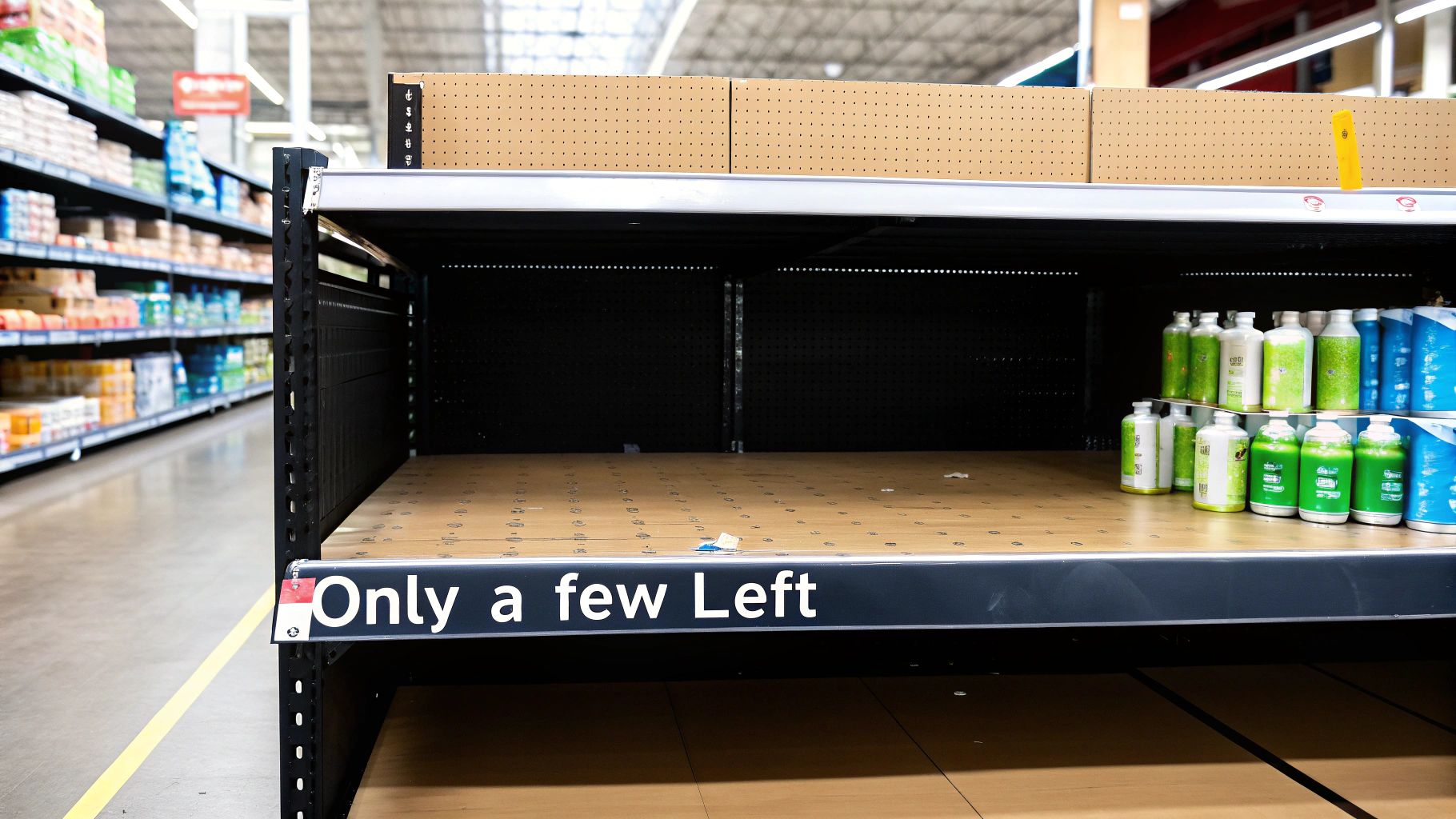
It’s pretty simple. When people see that something is in limited supply or that others are already seeing success with it, their interest is immediately piqued. This isn’t about faking it; it’s about strategically highlighting genuine limitations or showcasing real customer adoption to give prospects that final nudge.
Master Scarcity Without Being Obvious
Effective scarcity is much more sophisticated than the old "only 3 left in stock!" trick. For B2B sales, this means creating limitations around your team's availability, your specialized expertise, or access to exclusive features.
The trick is to make the scarcity feel like a natural byproduct of the incredible value you're offering.
Here are a few ways to do it without sounding cheesy:
- Limited Consultation Slots: Try something like, "To make sure every new client gets our full attention, we only have the capacity to onboard three more this month." This positions your time and attention as a premium, in-demand resource.
- Exclusive Beta Access: "The first 50 companies to sign on will get exclusive access to our new AI-powered analytics module before we roll it out to everyone else." This creates an immediate incentive to be part of an exclusive "in-group."
- Tiered Feature Access: You could also offer a particularly high-value feature only to a limited number of early adopters. It's a powerful reason to commit now instead of putting it off.
This approach subtly communicates that your resources are in high demand, which instantly boosts their perceived value. When prospects realize there's a real, logical limit, they understand why they need to act quickly. Ultimately, you want to tie that scarcity to a clear benefit, which is a core part of how you improve sales conversion rates.
Weave in Authentic Social Proof
Social proof is all about answering the one question every prospect is thinking: "Is anyone else like me using this, and is it working for them?" When they see their peers trust you, it dramatically lowers their perceived risk and creates a subtle pressure to keep up. Nobody wants to be the one left behind.
When a prospect is on the fence, seeing that others have already made the leap and are happy with their decision is often the final push they need. Authentic social proof validates their choice before they even make it.
For social proof to land, it has to feel genuine and relevant. The last thing you want to do is overwhelm people with generic praise. Research shows that combining scarcity signals with positive social proof is highly effective because it makes acting fast feel like a popular and smart decision.
Here's how to integrate it naturally into your process:
- Use Real-Time Notifications: Subtle pop-ups like, "Sarah from Acme Corp just booked a demo," show live activity on your site and build a sense of momentum.
- Deploy Targeted Testimonials: Don't just throw a random quote at them. If a prospect is worried about a tricky integration, show them a testimonial from a customer raving about your seamless setup process. Make it speak directly to their concerns.
- Highlight Specific User Numbers: "Join over 1,500 sales teams closing deals faster with our platform" is way more powerful than "Lots of teams use us." Specificity builds credibility and makes the impact feel real.
Crafting Your High-Impact Urgency Message
So you’ve got your time-based or scarcity triggers mapped out. Now for the tricky part: actually communicating them.
The words you choose here are everything. They're the difference between a helpful nudge that gets a deal over the line and a pushy shove that sends a prospect running for the hills. The goal is to create positive urgency, something that empowers your prospect to make a confident and timely decision.
The secret is to frame the whole situation from their perspective. Stop talking about what they'll lose by waiting. Instead, shine a spotlight on everything they stand to gain by acting now. It’s a simple shift, but it transforms the entire dynamic from negative pressure to positive opportunity.
Choosing Words That Empower
Your language needs to inspire action, not anxiety. And honestly, a few small vocabulary tweaks can completely change the emotional tone of your message.
- Ditch the negative framing: Phrases like "don't wait," "last chance," or "act now before it's gone" immediately put people on the defensive. They sound like commands, not invitations.
- Lean into positive, action-oriented words: Opt for language that puts the prospect in the driver's seat. Think "secure your spot," "reserve your discount," or "claim your bonus." This phrasing makes them feel like they're actively acquiring something valuable.
When you're thinking about how to deliver this message, don't forget about more dynamic formats. For instance, understanding how to use video ads to promote your digital marketing approach can make your offer feel way more immediate and compelling than a block of text.
The right message makes the prospect feel smart for acting decisively. It reinforces their decision-making power rather than making them feel cornered by a deadline.
Transforming Your Communication
Let's look at a few real-world examples of how small changes can totally transform your messaging. Notice how the "after" versions focus on the prospect's benefit and control.
Email Subject Lines:
- Before: Last Chance! Offer Expires Tonight
- After: A Special Onboarding Bonus For You (Ends Tonight)
Call-to-Action (CTA) Buttons:
- Before: Buy Now
- After: Claim My 20% Discount
Sales Call Scripts:
- Before: "If you don't sign by Friday, this price is gone for good."
- After: "I wanted to let you know we can lock in this pricing for you if we finalize things by Friday."
These adjustments are subtle, but they pack a punch. They turn a pushy demand into a helpful reminder, which is a game-changer for building trust and, ultimately, boosting conversion rates in sales. This approach respects the prospect's intelligence while still making the timeline perfectly clear.
And the impact of getting this right is massive. Studies have shown that adding clear deadlines and compelling calls to action can boost conversions by as much as 332%. Why? Because it taps directly into FOMO, compelling even the most distracted prospects to pay attention before a great opportunity vanishes. It’s solid proof that how you frame your message is just as important as the offer itself.
Automating Urgency with Sales Tools
Look, trying to manually create urgency for every single prospect is a surefire way to burn yourself out. It just doesn't scale. This is where you bring in technology to handle the logistics of your urgency-based offers, freeing you up to do what you do best: build relationships and close deals.
By automating the process, you build a consistent, non-pushy system that keeps opportunities moving forward.

This is precisely why modern sales tools are so critical. Instead of trying to track deadlines in a messy spreadsheet, you can build automated sequences that do the heavy lifting for you. This approach guarantees every prospect gets the right message at the right time, maximizing the punch of your time-sensitive offers without you lifting a finger.
Operationalize Urgency with Email Sequences
Automated email campaigns are a perfect way to put your time-based triggers into action. You can design a sequence that methodically reminds a prospect about an expiring offer, building momentum without a single manual follow-up.
The trick is to make these emails feel helpful, not harassing.
Let's say a prospect downloads your pricing guide. That's your cue to enroll them in a three-day sequence offering a limited-time bonus:
- Day 1: An email introduces a special offer: "Sign up this week and get a free, personalized onboarding session with one of our dedicated experts."
- Day 2: A follow-up email lands in their inbox, this time with a case study showcasing the massive value of that expert onboarding. It's a subtle, value-packed reminder about the deadline.
- Day 3: A final, friendly heads-up: "Just a quick reminder that the complimentary onboarding offer ends tonight. Let me know if you have any questions before then!"
This structured approach creates a natural and escalating sense of urgency. It’s a systematic way to guide the prospect toward a decision, making it a core part of how you effectively create urgency in sales.
Automation isn't about removing the human element. It's about handling the repetitive tasks so you can apply your human touch where it matters most—in strategic conversations.
Use Scheduling Tools to Create Natural Scarcity
Another incredibly powerful technique is to let your calendar do the talking. Tools like Distro can inject a bit of scarcity right into the scheduling process itself.
Think about it. When a prospect goes to book a demo, they see a real-time view of your team's availability. Seeing only a few open slots naturally communicates that your team is in high demand.
This isn't some fake, manufactured scarcity; it’s a genuine reflection of your team's valuable time. That subtle psychological cue encourages prospects to book a meeting sooner rather than later, just to make sure they can snag a spot that works for them.
By connecting a tool like Distro to your demo request forms, you can instantly route high-intent leads to the right rep’s calendar. This immediate engagement capitalizes on their interest when it's at its absolute peak, while the visible calendar slots add that organic layer of urgency. It transforms a simple scheduling action into a compelling reason to commit.
Common Questions About Sales Urgency
When you start talking about creating urgency, a few common (and totally valid) questions pop up around ethics and effectiveness. Let's clear the air so you can use these strategies with confidence and keep your customer relationships rock-solid.
Isn't Creating Urgency Just Manipulation?
Not if you do it right. The line between ethical urgency and straight-up manipulation is all about one thing: honesty.
Ethical urgency is about highlighting real-world reasons for a prospect to act now. Think an upcoming price increase, a limited number of onboarding slots for the month, or a special offer tied to a legitimate business goal. You're giving them the full picture.
Manipulation, on the other hand, is just making stuff up to pressure someone. Claiming "only one left!" for a digital product that has infinite supply? That's dishonest, and prospects can smell it a mile away. Always, always anchor your urgency in the truth. It's how you build credibility.
The goal is never to trick someone into buying. It's to provide them with all the information they need to make a smart, timely decision that benefits them.
What if a Prospect Misses a Deadline?
This one's tough, but you have to honor your deadlines. If you make an exception for one person, word gets around, and your deadlines lose all their power. You're basically training people to ignore you.
Instead of just caving and extending the offer, you can hold the boundary while still being helpful. Try something like, "While that specific offer has ended, I'd be happy to let you know the next time we run a promotion." This respects your own process and keeps the door open for another shot down the road.
Can Urgency Backfire and Kill a Deal?
Oh, absolutely. It can blow up in your face if it feels forced or inauthentic.
Aggressive, high-pressure tactics almost always create anxiety and suspicion, which sends prospects running for the hills. The key is to match the level of urgency to where you are in the relationship. Pushing for a close on the very first call with a "sign today or the deal is gone forever" ultimatum is a surefire way to obliterate any trust you might have built.
Urgency should only come into play after you've clearly established value and built real rapport. When a prospect genuinely understands why your solution is a great fit for them, a well-timed, logical deadline feels like a helpful nudge, not a hard shove. It becomes the natural final step in a conversation that was already focused on their success.
Ready to turn high-intent leads into booked meetings instantly? Distro automatically routes prospects to the right sales rep’s calendar the moment they show interest, creating natural urgency and maximizing conversions. See how it works at https://distro.so.